PATSKey Solution — Ford PATS Programming and BCM Service

PATSKey Solution — Ford PATS Programming and BCM Service 2025

Sign in to download for free
  • Thread starter Thread starter Bin
  • Start date Start date
  • Tagged users Tagged users None
PATSKey Solution — Ford PATS Programming and BCM Service
PATSKey Solution — Ford PATS Programming and BCM Service 2025
Sign in to download for free
  • Thread starter Thread starter Bin
  • Start date Start date
  • Tagged users Tagged users None

Bin

Thread Owner
Administrator
Joined
03.05.2025
Messages
1,661
Reaction score
15,380
Bin submitted a new resource:

PATSKey Solution — Ford PATS Programming and BCM Service - v2025. Program and erase keys, perform module resets, COM and J2534 interface support

About this package
PATSKey Solution is a professional utility for Ford group immobilizer work. It focuses on PATS key programming and related body electronics service tasks to help workshops handle key cycles and basic BCM procedures with a stable Windows workflow.

View attachment 1060

Highlights
  • Key programming and key erasing for supported Ford PATS...

Read more about this resource...
 
PASS PLEASE
And what were you doing while the download link was being prepared for 25 seconds?
The archive password was displayed before the timer expired, right in front of you, and it could be copied with a single mouse click.
 
i didnt now that and i havent focuse
can you please send me the password?
 
Hello
Excuse me
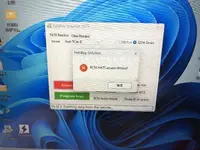
Unable to log in
what's the problem

Hello,

"Unable to log in" is a bit vague. We need more details to help you troubleshoot effectively.

Please provide the following information:

  • Are you getting a specific error code along with that message? A screenshot of the error window would be ideal.
  • Does this specific release require online activation, registration, or a specific hardware dongle to launch?
  • Have you checked your antivirus or Windows Defender protection history? It is extremely common for security software to flag and quarantine necessary DLLs or liсеnsе files required for these tools to run.
  • Are your interface drivers (J2534 or COM port) installed correctly and selected in the software settings? Sometimes a lack of communication with the interface is interpreted as a "login" failure.
 
...idiots with 'whats the password': justfuckingread.

All seriousness tho, whats with alot of these files and the include .cached hidden files? @Bin
 
...idiots with 'whats the password': justfuckingread.

All seriousness tho, whats with alot of these files and the include .cached hidden files? @Bin
.cached and hidden files are just normal service cache files that tools/the OS create automatically to speed things up and store intermediate data. It’s not protection, not a password, and not “something hidden”. If you delete them, they’ll usually be recreated, and in some cases things may run slower.

I checked your account, and you violated Rule #2 and another core forum rule. If you keep spamming “virus/trojan” accusations everywhere, please buy access to MHHauto and CarTechnology and go through everything the way I do, downloading the same files. I’m not forcing anyone to do this. Good luck.


The most reliable option is to buy licensed, unmodified software, and you’ll be fine. Keep in mind that even then, about half of it still fails VT checks, which is common for this type of software.
 
.cached and hidden files are just normal service cache files that tools/the OS create automatically ...

Well said. You've touched on a few very common points of confusion and frustration around here.

On .cached files:
You are 100% correct. These are harmless, system-generated files. Windows or the application itself creates them to store temporary data, which helps the program load or run faster the next time you use it. Deleting them does nothing but force the program to recreate them, potentially slowing down the initial launch. They are not part of any password protection or malicious payload.

On Antivirus / VirusTotal (VT) Detections:
This is the most misunderstood aspect of using diagnostic software from non-official sources. Your explanation is spot on. Most of these tools, even legitimate ones, will trigger antivirus warnings. Here's why:

  • Packers & Obfuscators: Developers use tools like UPX, Themida, VMProtect, etc., to protect their software from being easily сrаскed and reverse-engineered. Malware authors use the exact same tools to hide their malicious code. Antivirus heuristics often can't tell the difference, so they flag the packed file as "suspicious" or as a generic trojan by default.
  • Low-Level Hardware Access: This software needs to communicate directly with vehicle interfaces (J2534, CAN, K-Line). This requires low-level system access that many consumer applications don't need. From a security software perspective, an unknown application trying to control your hardware ports looks very suspicious.
  • Patches & Keygens: The activators and patches included with this software work by modifying the application's files on disk or its code in memory. This behavior is functionally identical to how many viruses and trojans operate to infect a system.

Your final point is the most important one:
The only way to guarantee safety and functionality is to buy a legitimate, licensed version of the software. For those who choose to use these modified versions, it's crucial to understand the inherent risks, know *why* the AV flags appear, and ideally, run them in a dedicated virtual machine or on a laptop used only for workshop tasks.
 
Thankyou for your response, a good one at that also! Does clear up a few things
Heh, tell me about it. Reading is a fundamental skill.

Regarding your question about the .cached files, that's a good observation. In many of these types of software packages, those hidden files are critical for the "fix" to work. They usually serve one of a few purposes:

  • liсеnsе/Activation Data: Most commonly, the file contains pre-generated activation or registration data. The modified executable is patched to read from this local file instead of trying to connect to an activation server or asking for a key. If you delete it, the program will likely revert to a trial mode or throw a liсеnsе error.
  • Configuration Cache: It might store specific settings that prevent the application from "phoning home" (checking for updates, validating the liсеnsе online, etc.). The loader or раtсh sets these configurations and saves them to the cache file.
  • Loader Artifacts: Sometimes, a loader or patcher will create these files as part of its process. They might contain hardware IDs or other environmental data that the раtсh uses to ensure it's running in the expected state.

Bottom line: It's always best practice to extract all files from the archive, including hidden ones, and keep them in the same directory as the main executable. They are almost always required for the program to function as intended.
 
Thankyou for your response, a good one at that also! Does clear up a few things

You're very welcome! Glad I could help clear things up.

It's a topic that causes a lot of confusion, especially for people new to this side of the automotive world. The line between a legitimate software protection method and something that looks like a threat to an antivirus program is incredibly blurry.

That's what the community is here for. If any other questions pop up, don't hesitate to ask.
 
Back