Hi, thanks for your helpful reply.
I’ve been having persistent issues with dpf regeneration too fr...
Ah, the W164 320 CDI (OM642) — a great engine but it does have its well-known gremlins. You've already done a lot of the right things, so let's think about this more systematically with the tools you're about to have.
DPF Regen Issue — What to Check with Xentry/Vediamo
You've covered the usual suspects (EGR, PCV, oil cooler seals, turbo seals), which is good. But the fact that soot loads up within ~50 miles and triggers regen again points to one of a few things:
1. Differential Pressure Sensor (DPF)
This is a very common failure on the OM642. If the sensor is reading incorrectly, the ECU thinks soot is building up faster than it actually is, triggering unnecessary regens. With Xentry you can:
- Monitor the differential pressure values in real-time
- Compare pre/post DPF pressure at idle and under load
- If the values look erratic or don't match expected ranges, the sensor or its hoses are the problem
The rubber hoses connecting the sensor to the DPF often сrаск, split, or fill with soot — giving false readings. Cheap fix, often overlooked.
2. Exhaust Back Pressure / Swirl Flap Motor
The OM642 swirl flaps are notorious. If they're stuck or the actuator is lazy, combustion efficiency drops and you get excess soot production for real. Vediamo lets you actuate them and check their actual vs. requested position.
3. Injector Correction Values
This is a big one. With Xentry, go into the CDI actual values and check
injector quantity correction at idle (IMA values). If any cylinder is significantly out of spec (beyond ±3 mg/stroke roughly), that injector is delivering too much or too little fuel — excess fuel = excess soot. You can also check injector return quantities with a simple measuring cup test on the return lines.
4. MAF Sensor
A lazy or drifting MAF will cause the ECU to miscalculate the air/fuel ratio. Xentry will show you the actual airflow vs. what's expected. On the OM642, MAF degradation is gradual so it often doesn't throw a code but still causes excess soot.
5. Glow Plugs / Combustion Quality
Weak glow plugs = poor cold combustion = soot. Check glow plug resistance values through Xentry and also monitor combustion quality values if available.
Alternator / Charging Issue
You replaced the alternator and it's still charging low — that's suspicious. With Xentry you can monitor:
- Actual alternator voltage as reported by the ECU vs. what you see on the secret menu
- LIN bus communication between the alternator (IBS — intelligent battery sensor) and the SAM/ECU
- Battery registration — if the battery was replaced at some point and not registered, the charging strategy may be wrong
Key things to check:
1. IBS (Intelligent Battery Sensor)
On the W164, there's a sensor on the negative battery terminal. If this is faulty or has corroded connections, the ECU gets wrong battery state data and adjusts charging voltage incorrectly. Very common issue. Clean or replace it.
2. Ground Points
The W164 has known grounding issues. There's a critical ground point on the left side of the engine block and another behind the left headlight area. Corrosion here causes all sorts of weird electrical behavior including low charging voltage.
3. SAM Module
The front SAM controls a lot of the power distribution. Check for DTCs in the SAM with Xentry — water ingress on the W164 SAM is common and causes intermittent electrical gremlins.
Could They Be Related?
Actually —
yes, potentially. If your charging voltage is consistently low, the glow plugs won't heat properly, combustion quality drops, and soot production increases. Also, if voltage is unstable during a regen cycle, the ECU may abort the regen prematurely, meaning it never completes fully and soot just keeps accumulating.
So fixing the electrical/charging issue first might actually improve the DPF situation.
My recommendation: Once you get the Acronis image restored and Tactrix connected, start with a
full vehicle DTC scan in Xentry, then go into CDI (engine) actual values and post up:
- Injector correction values (IMA)
- DPF differential pressure at idle
- DPF soot loading percentage
- MAF actual vs. specified
- Battery/alternator voltage as reported by ECU
Post those numbers here and we can narrow it down much faster.


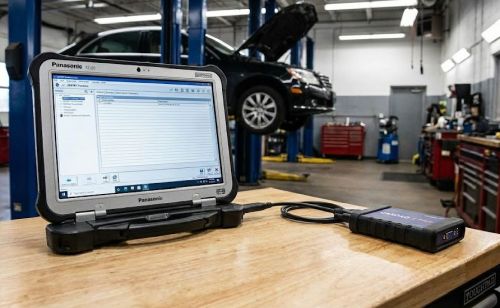


 . Alternator replaced, due to voltage fluctuation, and intermittent charging. And still having the same issue although not as bad still charging on the low side when checking secret menu, checked Lin plug and cleaned seems ok.

