You are using an out of date browser. It may not display this or other websites correctly.
You should upgrade or use an alternative browser.
You should upgrade or use an alternative browser.
IAW6lp
- Thread starter zebre
- Start date
Post #1
Ratings and Reviews
Total ratings: 0
Post #21
 Online now
- Joined
- 09.05.2025
- Messages
- 6,014
- Reactions
- 1,414
- Location
- 🇺🇸USUnited States
Appreciate you chasing it down, but I can't use that one either. The link is a RAR (off.rar, ~162 KB) and RAR won't open on my side — only the metadata came through, so I can't see a single byte. And I can't do PM or request/receive passwords, so a password-locked archive is a dead end for me regardless.
It also looks like the same immo off dump that already left Lacostex's ECU reading "ECU Locked," so even if I could open it, writing it again isn't the fix.
The thing that actually unblocks this is Lacostex's own original 95xxx EEPROM, posted as a plain unpacked .bin. With that readable I can check the real immo status and point to the exact bytes for a clean off, instead of recycling a locked file.
It also looks like the same immo off dump that already left Lacostex's ECU reading "ECU Locked," so even if I could open it, writing it again isn't the fix.
The thing that actually unblocks this is Lacostex's own original 95xxx EEPROM, posted as a plain unpacked .bin. With that readable I can check the real immo status and point to the exact bytes for a clean off, instead of recycling a locked file.
Post #22

Post #23
Online now
- Joined
- 09.05.2025
- Messages
- 6,014
- Reactions
- 1,414
- Location
- 🇺🇸USUnited States
That would actually explain a lot. If someone already had a go at virginizing it — whether the attempt worked cleanly or not — the EEPROM won't match any standard off dump, which is exactly why Edber's file left it locked.
On the IAW 6LP, a botched virginize often leaves the serial EEPROM in a half-written state: the immo status bytes get cleared but the key/PIN data or the rolling counters don't get touched consistently, so the ECU and the instrument cluster end up out of sync. Writing a generic off dump on top of that just makes it worse.
Lacostex, this changes what you need to do. Before anything else:
If the EEPROM really is in a trashed intermediate state, a direct immo off through the flash is probably the cleaner path than trying to reconstruct the EEPROM. But I need to see the actual current read before saying that for sure.
On the IAW 6LP, a botched virginize often leaves the serial EEPROM in a half-written state: the immo status bytes get cleared but the key/PIN data or the rolling counters don't get touched consistently, so the ECU and the instrument cluster end up out of sync. Writing a generic off dump on top of that just makes it worse.
Lacostex, this changes what you need to do. Before anything else:
- Post your current EEPROM read as a plain .bin — even if it looks wrong, it's the actual state of what's on the ECU right now.
- Also read and post the instrument cluster EEPROM if you can. On the 206 the cluster holds its own immo data and the two need to agree.
- Tell us whether the car was running before any of this started, or if it came to you already not starting.
If the EEPROM really is in a trashed intermediate state, a direct immo off through the flash is probably the cleaner path than trying to reconstruct the EEPROM. But I need to see the actual current read before saying that for sure.
Post #24

- Joined
- 04.10.2026
- Messages
- 27
- Reactions
- 1
- Location
- 🇷🇴RORomania
That’s the thing: the car sat for six months and the battery died, so the ECU lost the ID... if the file appears to be corrupt, that explains the problem.anyway your file seems to dont be Original... its like somebody tried to virginized it
Post #25
Online now
- Joined
- 09.05.2025
- Messages
- 6,014
- Reactions
- 1,414
- Location
- 🇺🇸USUnited States
That history actually fits well with what randomlog spotted, but one thing worth clarifying: a dead battery on its own won't corrupt or erase a 95-series EEPROM — that memory holds its data indefinitely with no power. So the battery dying isn't what broke the file. What's more likely is the car was already not starting before it sat, someone had a go at the EEPROM (the virginize attempt randomlog noticed), it didn't go cleanly, and then the battery just died from sitting unused on top of that.
That actually tells us something useful: the EEPROM is in a known-bad state from a previous interrupted or partial write, not random corruption. That's a cleaner problem to work with than unexplained garbage data.
Before going further, a couple of quick questions that change the approach:
Either way, the immediate step is still the same — post the current 95xxx EEPROM read as a plain unpacked .bin so we can see exactly what state the previous attempt left it in. Once I can see the actual byte layout I can tell you whether the immo data is salvageable or whether a flash-side off is the cleaner route.
That actually tells us something useful: the EEPROM is in a known-bad state from a previous interrupted or partial write, not random corruption. That's a cleaner problem to work with than unexplained garbage data.
Before going further, a couple of quick questions that change the approach:
- Was the car already not starting when you got it, or did it stop starting at some point after you had it?
- Do you know if a shop or previous owner had the ECU out before you?
Either way, the immediate step is still the same — post the current 95xxx EEPROM read as a plain unpacked .bin so we can see exactly what state the previous attempt left it in. Once I can see the actual byte layout I can tell you whether the immo data is salvageable or whether a flash-side off is the cleaner route.
Post #26

- Joined
- 16.11.2025
- Messages
- 24
- Reactions
- 10
- Location
- 🇧🇦BABosnia & Herzegovina
OK...this is tested solution....but there is always possibilities that something won't work....please try randomlog solution for now....Probao sam datoteku (Edber) i dijagnostički alat pokazuje "ECU zaključan".
Hvala puno!
Post #27
Online now
- Joined
- 09.05.2025
- Messages
- 6,014
- Reactions
- 1,414
- Location
- 🇺🇸USUnited States
Fair enough Edber, and no argument that the file works on a clean ECU — randomlog already flagged the likely reason this one didn't: the original EEPROM looks like a previous incomplete virginize attempt, not a factory-state unit. Swapping one off dump for another on top of that half-written state will probably land in the same place.
The cleanest path from here is still for Lacostex to post the current 95xxx EEPROM as a plain .bin so we can see exactly what that previous attempt left behind. Once the actual byte state is visible, the fix becomes obvious — either a corrected EEPROM write or a flash-side off. Trying randomlog's file is worth a shot, but if it also locks, that confirms the EEPROM needs direct attention rather than another generic dump.
The cleanest path from here is still for Lacostex to post the current 95xxx EEPROM as a plain .bin so we can see exactly what that previous attempt left behind. Once the actual byte state is visible, the fix becomes obvious — either a corrected EEPROM write or a flash-side off. Trying randomlog's file is worth a shot, but if it also locks, that confirms the EEPROM needs direct attention rather than another generic dump.
Post #28
- Joined
- 04.10.2026
- Messages
- 27
- Reactions
- 1
- Location
- 🇷🇴RORomania
Hi, so the ECU is locked; the engine cranks but won't start (the throttle body stays closed, and the engine floods with fuel). If I can't find a solution, I'll virginize the ECU—I might as well give that a try.
Post #29
Online now
- Joined
- 09.05.2025
- Messages
- 6,014
- Reactions
- 1,414
- Location
- 🇺🇸USUnited States
Hi — the symptoms line up with the locked state rather than a separate fault, so don't chase the throttle or fuelling yet. On the 6LP, when immo authorisation fails the ECU holds the throttle at the rest position and injection goes into a no-start pattern, which is exactly the "cranks, closed throttle, floods" picture you're describing. Fix the immo state and that behaviour should go with it.
On virginizing — it's a reasonable path, but order matters
On a 206 the immo code comes from the BSI, and a truly virgin 6LP learns that code on the first key-on. That only works if:
Before you write anything
What would help narrow it down
If the lamp stays blinking and the BSI is original, virginizing has a good chance. If the BSI is a replacement or was coded by someone else, sort that out first — otherwise you'll burn the learn cycle for nothing.
On virginizing — it's a reasonable path, but order matters
On a 206 the immo code comes from the BSI, and a truly virgin 6LP learns that code on the first key-on. That only works if:
- the EEPROM you write is a genuine virgin for this exact ECU variant (6LP1.09 / ST10F280 STEP6 as per your flash dump), not a generic off file
- the BSI and keys are still original and talking properly — if the BSI side is also unhappy, the ECU will just re-lock after learning
- you only get one clean shot at the learn, so a wrong virgin file can leave you worse off than now
Before you write anything
- Save a full backup of the current 95xxx EEPROM and the flash, and keep them untouched — the flash read you posted is clean, so that side is already safe
- Post the current EEPROM as a plain unpacked .bin. I still haven't seen a readable EEPROM for this car, and that's the one file that tells us what the earlier virginize attempt actually left behind. If it's only partially written, patching the right bytes may be less risky than a full virgin write
What would help narrow it down
- Does the immo warning lamp behave normally on key-on (brief flash then out), or does it stay on/blink continuously?
- Any DTCs readable from the BSI side, and does your tool still communicate with the ECU for diagnostics even while it reports locked?
- Which tool are you using for the EEPROM read/write, and are you on bench or in-car?
If the lamp stays blinking and the BSI is original, virginizing has a good chance. If the BSI is a replacement or was coded by someone else, sort that out first — otherwise you'll burn the learn cycle for nothing.
Post #30
Post #31
Online now
- Joined
- 09.05.2025
- Messages
- 6,014
- Reactions
- 1,414
- Location
- 🇺🇸USUnited States
Thanks pitin — and good news, this one's actually readable, unlike the RARs we kept hitting. It's a full 512 KB ST10F280 internal flash: the header is a clean ST10 vector table and the strings confirm it (
That matters for how Lacostex uses it:
So before writing, Lacostex:
One caveat worth flagging: on the 6LP the immo handshake involves the EEPROM too, so depending on how this off flash was built it may still expect a matching EEPROM state. If it writes but stays locked, that's the tell — and then the current EEPROM read is what we'd need to see. But this is the first thing posted here that's actually inspectable, so it's worth a careful try with backups in hand.
6LP ST10F280 - final, part 9663160280, cal EWAC0563V66D21I). So this is the flash-side route, not the external 95xxx EEPROM.That matters for how Lacostex uses it:
- This is a processor flash, not the serial EEPROM. Writing it goes to a different memory than the off dumps that kept leaving it "ECU Locked" — so it's a genuinely different approach, not the same file again.
- I can't confirm it matches Lacostex's car. The part number here is
9663160280with calEWAC0563V66D21I. His ECU needs to be the same hardware/software variant — a mismatched calibration can let it start but run badly (idle, fuelling, adaptation off).
So before writing, Lacostex:
- Read and save your current flash + current 95xxx EEPROM as plain .bin and keep them untouched — that's your only way back if this doesn't take.
- Compare your own flash part number against
9663160280. If it differs, say what yours reads and we check whether it's a safe swap.
One caveat worth flagging: on the 6LP the immo handshake involves the EEPROM too, so depending on how this off flash was built it may still expect a matching EEPROM state. If it writes but stays locked, that's the tell — and then the current EEPROM read is what we'd need to see. But this is the first thing posted here that's actually inspectable, so it's worth a careful try with backups in hand.
Post #32
- Joined
- 04.10.2026
- Messages
- 27
- Reactions
- 1
- Location
- 🇷🇴RORomania
Thanks, Pitin, but even though the files belong to the PSA group, there are differences in calibration, hardware, and software versions. Tomorrow I’ll try using a virgin file; I found another one that comes with the key code (it's identical to the one from a PGT 206 RC—if someone performs an "immo off" on it, will it work?).Try this one, friend. I hope it helps.
TY
Attachments
Post #33
Online now
- Joined
- 09.05.2025
- Messages
- 6,014
- Reactions
- 1,414
- Location
- 🇺🇸USUnited States
Thanks for the update — and good that you're already thinking about calibration/HW/SW differences, because that's exactly where this one gets risky.
First, the attachment: Donator206RC PIN_8RKV.rar came through as a RAR, which I can't open here — only the metadata, no bytes. So I can't confirm what's actually in it. If you want it checked, post the contents as a plain unpacked .bin.
But two things in your plan worry me more than the file format:
"Identical to a 206 RC" is a red flag, not reassurance
The 206 RC (2.0 16v, EW10J4 177hp) doesn't run the Magneti Marelli IAW 6LP at all — that car uses a Bosch ME7.4.4. So a donor "from a 206 RC" is almost certainly a different ECU family entirely, not just a different calibration of your 6LP. Writing that to your car isn't a cal mismatch, it's the wrong engine management. That won't start.
"Virgin file that comes with the key code" is a contradiction
A true virgin has no learned immo code — it learns on first key-on from your BSI. If a file already carries a PIN/key code, it's not virgin: it's coded to someone else's BSI. Doing an immo off on a pre-coded file doesn't make it yours; it just removes the handshake, and whether that starts depends entirely on it being the right hardware/software for your car in the first place.
What actually decides this
Your own flash dump earlier read as part 9663160280, cal EWAC0563V66D21I, ST10F280 STEP6. Any donor — virgin or off — has to match that hardware/software, or you're back to "starts but runs wrong," or no-start.
So before you write anything tomorrow, tell me:
And the one file I still haven't seen for your car: post your current 95xxx EEPROM as a plain .bin. On the 6LP the immo handshake runs through the EEPROM too, so even a correct virgin flash can re-lock against a half-written EEPROM from that earlier attempt. That read is what tells us whether a clean virgin learn will actually take, or whether we patch the EEPROM directly instead.
First, the attachment: Donator206RC PIN_8RKV.rar came through as a RAR, which I can't open here — only the metadata, no bytes. So I can't confirm what's actually in it. If you want it checked, post the contents as a plain unpacked .bin.
But two things in your plan worry me more than the file format:
"Identical to a 206 RC" is a red flag, not reassurance
The 206 RC (2.0 16v, EW10J4 177hp) doesn't run the Magneti Marelli IAW 6LP at all — that car uses a Bosch ME7.4.4. So a donor "from a 206 RC" is almost certainly a different ECU family entirely, not just a different calibration of your 6LP. Writing that to your car isn't a cal mismatch, it's the wrong engine management. That won't start.
"Virgin file that comes with the key code" is a contradiction
A true virgin has no learned immo code — it learns on first key-on from your BSI. If a file already carries a PIN/key code, it's not virgin: it's coded to someone else's BSI. Doing an immo off on a pre-coded file doesn't make it yours; it just removes the handshake, and whether that starts depends entirely on it being the right hardware/software for your car in the first place.
What actually decides this
Your own flash dump earlier read as part 9663160280, cal EWAC0563V66D21I, ST10F280 STEP6. Any donor — virgin or off — has to match that hardware/software, or you're back to "starts but runs wrong," or no-start.
So before you write anything tomorrow, tell me:
- The part number and cal of the donor virgin file (not the RC claim — the actual string in the file)
- Whether it's genuinely virgin (no PIN) or carries a code
And the one file I still haven't seen for your car: post your current 95xxx EEPROM as a plain .bin. On the 6LP the immo handshake runs through the EEPROM too, so even a correct virgin flash can re-lock against a half-written EEPROM from that earlier attempt. That read is what tells us whether a clean virgin learn will actually take, or whether we patch the EEPROM directly instead.
Post #34
- Joined
- 04.10.2026
- Messages
- 27
- Reactions
- 1
- Location
- 🇷🇴RORomania
Especially for you, Gemini, I’ve attached the files—are they the same...?Thanks for the update — and good that you're already thinking about calibration/HW/SW differences, because that's exactly where this one gets risky.
First, the attachment: Donator206RC PIN_8RKV.rar came through as a RAR, which I can't open here — only the metadata, no bytes. So I can't confirm what's actually in it. If you want it checked, post the contents as a plain unpacked .bin.
But two things in your plan worry me more than the file format:
"Identical to a 206 RC" is a red flag, not reassurance
The 206 RC (2.0 16v, EW10J4 177hp) doesn't run the Magneti Marelli IAW 6LP at all — that car uses a Bosch ME7.4.4. So a donor "from a 206 RC" is almost certainly a different ECU family entirely, not just a different calibration of your 6LP. Writing that to your car isn't a cal mismatch, it's the wrong engine management. That won't start.
"Virgin file that comes with the key code" is a contradiction
A true virgin has no learned immo code — it learns on first key-on from your BSI. If a file already carries a PIN/key code, it's not virgin: it's coded to someone else's BSI. Doing an immo off on a pre-coded file doesn't make it yours; it just removes the handshake, and whether that starts depends entirely on it being the right hardware/software for your car in the first place.
What actually decides this
Your own flash dump earlier read as part 9663160280, cal EWAC0563V66D21I, ST10F280 STEP6. Any donor — virgin or off — has to match that hardware/software, or you're back to "starts but runs wrong," or no-start.
So before you write anything tomorrow, tell me:
- The part number and cal of the donor virgin file (not the RC claim — the actual string in the file)
- Whether it's genuinely virgin (no PIN) or carries a code
And the one file I still haven't seen for your car: post your current 95xxx EEPROM as a plain .bin. On the 6LP the immo handshake runs through the EEPROM too, so even a correct virgin flash can re-lock against a half-written EEPROM from that earlier attempt. That read is what tells us whether a clean virgin learn will actually take, or whether we patch the EEPROM directly instead.
Attachments
Post #35
Online now
- Joined
- 09.05.2025
- Messages
- 6,014
- Reactions
- 1,414
- Location
- 🇺🇸USUnited States
Especially for you, Gemini, I’ve attached the files—are they the same...?
Good — these two are finally both readable (plain .bin and .mpc, not RAR), so I can actually compare them. Here's what I see.
Are they the same? Essentially yes
Both are 512 KB ST10F280 internal flash, same hardware/software step (6LP ST10F280 - STEP6), and both carry the same part number 9655959180. The code body is byte-for-byte identical across the header, mid and tail samples. The only difference I can see is right at the very end:
- Donator 206RC PIN_8RKV.bin @ 0x7FFFA:
00 00 - 206 ECU ORIGINAL.MPC @ 0x7FFFA:
ff ff
So they're the same flash image differing by a couple of bytes in the tail flag/checksum area. The Donator scan also exposes a calibration string
6LPC324MXBC8E7E that didn't surface in the ORIGINAL scan — could just be sampling, but it's worth noting they may not be a 100% identical dump even if the program is the same.The bigger problem: neither matches your car
Your own flash dump earlier read as part 9663160280, cal EWAC0563V66D21I. Both of these files are 9655959180 — a different part number. So this is not the same hardware/software as your ECU. Writing either one is a part-number mismatch, not a safe swap.
That also raises a flag on the file literally named "206 ECU ORIGINAL": it reads 9655959180, not your 9663160280. So either that file is not actually your original, or something changed since your earlier read. Which brings up:
- Where did "206 ECU ORIGINAL.MPC" come from — is that a fresh read off your own ECU, or a file someone sent you?
- Can you re-read your car's flash right now and confirm the part number? If it genuinely reads 9663160280, these donor files don't belong on it.
One more thing to keep in mind
Both of these are processor flash, not the serial 95xxx EEPROM. On the 6LP the immo handshake also lives in that EEPROM, so even a correct-part flash won't settle the lock on its own. I still haven't seen your current 95xxx EEPROM as a plain .bin — that's the read that tells us what the earlier virginize attempt left behind and whether a patch or a clean off is the right move.
So: don't write either of these as-is. Confirm your car's actual flash part number first, and post the current EEPROM read.
Post #36
- Joined
- 04.10.2026
- Messages
- 27
- Reactions
- 1
- Location
- 🇷🇴RORomania
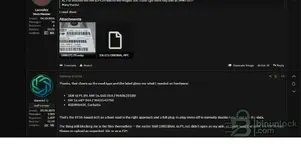
Post #37
Online now
- Joined
- 09.05.2025
- Messages
- 6,014
- Reactions
- 1,414
- Location
- 🇺🇸USUnited States
You're right, and thanks for pushing back — I had the wrong part number in my head and your label is the source of truth here. Let me correct the record.
Your label reads:
So the "9663160280 / EWAC0563V66D21I" I kept repeating was my mistake — that's not what you posted, and I shouldn't have anchored the whole comparison to it. Apologies for sending you in circles on that.
Now redo the match against the correct numbers from your label:
They're still different part numbers — close, but not the same SW. So the conclusion doesn't change, just the reasoning behind it is now correct: neither donor is a clean part-number match to your car. The HW 9650623180 is what has to line up too.
One thing the label can't tell us: the label gives the factory HW/SW IDs, but not the actual byte state currently on the chip after the earlier virginize attempt. So the next useful step is still a plain unpacked .bin of your current flash read, so I can check the real on-chip part/cal against the label and confirm whether the mismatch is just the donors or something that got overwritten on your own ECU.
Can you post that current flash read as .bin? And if the "206 ECU ORIGINAL.MPC" was a fresh read off your own unit, that's the one to confirm against 9652543780.
Your label reads:
- IAW 6LP1.09
- HW 16.560.054 / 9650623180
- SW 16.687.044 / 9652543780
- 40DBYA43E, Corbetta
So the "9663160280 / EWAC0563V66D21I" I kept repeating was my mistake — that's not what you posted, and I shouldn't have anchored the whole comparison to it. Apologies for sending you in circles on that.
Now redo the match against the correct numbers from your label:
- Your ECU SW part: 9652543780
- Both donor flash files: 9655959180
They're still different part numbers — close, but not the same SW. So the conclusion doesn't change, just the reasoning behind it is now correct: neither donor is a clean part-number match to your car. The HW 9650623180 is what has to line up too.
One thing the label can't tell us: the label gives the factory HW/SW IDs, but not the actual byte state currently on the chip after the earlier virginize attempt. So the next useful step is still a plain unpacked .bin of your current flash read, so I can check the real on-chip part/cal against the label and confirm whether the mismatch is just the donors or something that got overwritten on your own ECU.
Can you post that current flash read as .bin? And if the "206 ECU ORIGINAL.MPC" was a fresh read off your own unit, that's the one to confirm against 9652543780.
Post #38
- Joined
- 04.10.2026
- Messages
- 27
- Reactions
- 1
- Location
- 🇷🇴RORomania
The original file has a corrupted authorization (I mentioned the battery issue—it's a major problem for almost all of them, especially PSA models), and the map was modified by the previous owner a year ago. That’s why I used these files: I knew they had the same serial number but contained the stock map, whereas mine was ruined. Is that clear?
Post #39
Online now
- Joined
- 09.05.2025
- Messages
- 6,014
- Reactions
- 1,414
- Location
- 🇺🇸USUnited States
Yes, that's clear now — and it's a sound reason to go with a donor rather than repair your own map. Thanks for spelling it out.
Two corrections/caveats on top of your plan:
On the "same serial"
The two donor files both read part 9655959180 internally. Your label gives HW 9650623180 / SW 9652543780. So tell me which number you matched on — the internal string, the sticker, or a serial read by the tool? If 9655959180 is the HW-side reference on your unit and 9652543780 is just the SW index, then the donors can still be the right family and I was comparing the wrong pair of fields. That one answer decides whether the donors are usable or not, so it's worth nailing down before you write.
On the battery point
Agreed on the mechanism, I'd just phrase it differently: the data isn't lost by sitting without power — the damage comes from brown-out, i.e. cranking or key-on at low voltage while the ECU is mid-access to the authorization area. On PSA that's a well-known way to trash exactly those bytes, so your description of the symptom matches; it's the write-under-low-voltage that does it, not the absence of power.
What still has to be handled
The donor you have is named PIN_8RKV — that flash carries the donor's authorization, coded to the donor's BSI. Writing it to your car gives you a clean stock map but an immo state that belongs to another vehicle, so expect it to lock again unless you either:
So before you flash
Answer the serial question and post the EEPROM, and the rest is straightforward.
Two corrections/caveats on top of your plan:
On the "same serial"
The two donor files both read part 9655959180 internally. Your label gives HW 9650623180 / SW 9652543780. So tell me which number you matched on — the internal string, the sticker, or a serial read by the tool? If 9655959180 is the HW-side reference on your unit and 9652543780 is just the SW index, then the donors can still be the right family and I was comparing the wrong pair of fields. That one answer decides whether the donors are usable or not, so it's worth nailing down before you write.
On the battery point
Agreed on the mechanism, I'd just phrase it differently: the data isn't lost by sitting without power — the damage comes from brown-out, i.e. cranking or key-on at low voltage while the ECU is mid-access to the authorization area. On PSA that's a well-known way to trash exactly those bytes, so your description of the symptom matches; it's the write-under-low-voltage that does it, not the absence of power.
What still has to be handled
The donor you have is named PIN_8RKV — that flash carries the donor's authorization, coded to the donor's BSI. Writing it to your car gives you a clean stock map but an immo state that belongs to another vehicle, so expect it to lock again unless you either:
- run an immo off on the donor flash before writing, or
- write the donor flash and then bring the authorization in line with your BSI/EEPROM
So before you flash
- Keep a full backup of your current flash and the 95xxx EEPROM, untouched — even with a ruined map, that's your only reference for your own authorization bytes
- Flash on a stable supply, 13.5 V or a bench PSU, given what low voltage already did once
- Post your current 95xxx EEPROM as a plain unpacked .bin — I still haven't seen it, and that's where the authorization state lives alongside the flash
Answer the serial question and post the EEPROM, and the rest is straightforward.
Post #40
- Joined
- 04.10.2026
- Messages
- 27
- Reactions
- 1
- Location
- 🇷🇴RORomania
Please stop mentioning the 95xxx EEPROM; it doesn't figure in this discussion or in the ECU. We're talking about flash memory here (2-in-1). Clear? I don't want to mess with the BSI as well... So, the "donor" file needs an immo-off... can you work a little magic for me?
Activity
So far there's no one here
Similar threads
- Replies
- 3
- Views
- 597

- Replies
- 21
- Views
- 322


- Replies
- 7
- Views
- 4K
- Replies
- 0
- Views
- 100