
Description
ATSG Automatic Transmission Service Database is a large offline workshop reference for diagnosing, dismantling, rebuilding and verifying domestic and import automatic transmissions. It combines searchable technical information with transmission manuals, hydraulic and mechanical data, seminar material and service-bulletin indexes.
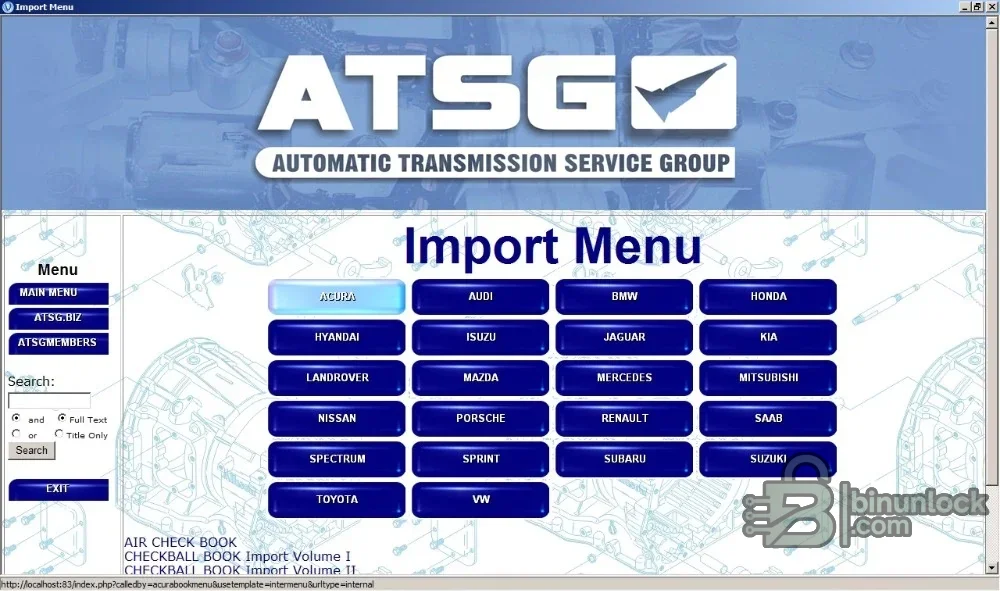
Supported vehicles, ECUs and files#
ATSG documentation is organized by transmission family and vehicle application rather than by a single universal repair procedure. Depending on the unit, material can include component identification, hydraulic passage information, air-check locations, clutch or band operation, specifications, diagrams and known service corrections. Always match the transmission code, case and valve-body generation before using a procedure.- Domestic and import automatic transmission families represented in the installed database.
- Passenger-car, light-truck and selected commercial applications where ATSG has published service material.
- Technical-service bulletins and seminar indexes included with this offline release.
- Search and make-based navigation for locating a transmission family from a known vehicle application.
Functions#
- Locate overhaul and diagnostic references by make, model or transmission family.
- Review hydraulic diagrams, component operation and air-check procedures where supplied.
- Check clearances, clutch/band data, torque values and diagnostic notes in the applicable manual.
- Cross-reference service bulletins and seminar material for known faults or production changes.
System and hardware requirements#
- A compatible legacy Windows environment with several gigabytes of free space for the offline database and media.
- Administrator or compatibility-mode access may be required by the original installer.
- A PDF reader and normal workshop display resolution for manuals and diagrams.
- The exact transmission identification code and current vehicle service information.
Recommended workflow#
- Identify the transmission from the tag, case, pan, connector and vehicle data before opening a manual.
- Confirm production breakpoints and valve-body or solenoid generation, not merely the marketing model name.
- Use hydraulic and electrical diagnosis before disassembly and record measurements during teardown.
- Cross-check critical torque, fluid and adaptation procedures with current OEM information before return to service.


